> ## Documentation Index
> Fetch the complete documentation index at: https://brightdata-ipv6-release.mintlify.site/llms.txt
> Use this file to discover all available pages before exploring further.
# How to Configure Your Residential Proxy
> Configure your Bright Data Residential Proxy settings with ease. Learn how to set IP types, enable geolocation targeting, manage advanced options like long-session peers, and more.
Start by going to the configuration tab of the proxy you want to configure.
## Proxy type
**Choose one of three Proxy types (IPs types) for your proxy zone:**
When you need a cost-efficient option, and you don’t require IP exclusivity. These proxies will rotate, so in every request you can get a new IP address ("Rotating proxies").
Proxies are shared across **multiple** users.
IPv6 proxies worldwide: Rotating IPv6 proxies in multiple location.
The new IPv6 feature is offered to selected customers only.
When you need an exclusive access to a set of specific domains, with minimal to no rotation at all.
Proxies are used by **you only** towards the specified target domains.
***
## Configuring Residential shared proxies (Rotating proxies)
Bright data will automatically assign a new proxy for each of your requests. You can control the behavior of the shared proxies as well as rotation using control panel settings and proxy options which are relayed in the proxy username parameter.
Most common setup is the Geolocation targeting allowing you to route your requests via proxies in specified location. You can select a default location - which will route all requests thru specific locations via our control panel.
Best practice: set up a separate residential proxy zone, for each geolocation you wish to target.
### Geolocation resolution options
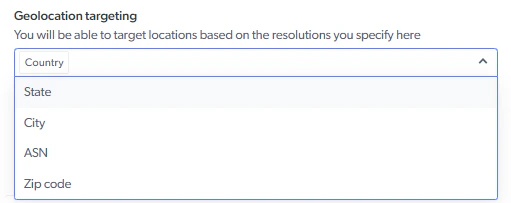
Geolocation targeting allows you to target specific locations based on `country`,`city`, `state`, `zip code`, or `ASN`. Select the resolution from the drop-down menu in your geolocation settings:
 ### Shared pool default countries' selection
When selecting countries in shared pool configuration, we will assign proxies only from the locations you select. You can select none (which means we will assign the next random proxy from the pool), one or more countries. [Read more...](https://docs.brightdata.com/api-reference/proxy/geolocation-targeting#default-countries-selection)
You can override the default selection or explicitly assign a specific country for your peer during rotation, use the flag `-country` in the proxy user name parameter with an ISO-3166 country code.
[FAQ: Where can I see the list of country codes?](https://docs.brightdata.com/general/faqs#where-can-i-see-the-list-of-country-codes)
***
## Configuring IPv6 Shared residential proxies
The configuration of IPv6 shared residential proxies is exactly the same as IPv4. Only difference is that IPs which we will assign will be IPv6.
## Introduction
Bright Data now supports IPv6 on its residential network. Setup and use of IPv6 proxies is very similar to IPv4 proxies.
IPv6 (Internet Protocol version 6) is the most recent version of the Internet Protocol, designed to replace IPv4. It was developed to address the limitations of IPv4, particularly the exhaustion of available IP addresses. While IPv4 uses 32-bit addresses (allowing for about 4.3 billion unique IPs), IPv6 uses 128-bit addresses, enabling a virtually unlimited number of unique IP addresses — over 340 undecillion (3.4×10³⁸).
The differences in the setup and use are listed below.
## Supported network
We now support IPv6 on our worldwide reliable residential proxy network. Approximately 150,000 peers are available, with new ones joining every week. The proxies are collated in our “rotating shared pool” of residential proxies.
## Access Policy
IPv6 proxies comply with [residential network access policy. ](https://docs.brightdata.com/proxy-networks/residential/network-access%5C)It is available only to selected customers who passed our KYC and are eligible to use this protocol over our Residential network.
## Supported options of Bright Data residential IPv6 proxies
All our IPv4 options are supported, except the list below:
1. -gip - No selected gIP targeting (group of residential ips)
2. -asn - No ASN targeting
3. -zip - No zip code targeting
4. -ip - No explicit IP targeting
5. -carrier - No mobile carrier targeting
6. -os - No explicit operating system targeting
If you chose to relay those in your proxy username and your zone was set to IPv6, we will ignore them and process the request.
Full list of options can be found here: [https://docs.brightdata.com/proxy-networks/config-options](https://docs.brightdata.com/proxy-networks/config-options)
## Targeting with IPv6 proxy and IPv4 only domain
If you choose to target with IPv6 proxy an IPv4 only domain, which do not have an IPv6 address, your request will result in HTTP error 502, with Bright Data error header (x-brd-err-code): `target_40001`. You should retry the request with IPv4 proxy.
Full list of errors can be seen in our catalog, together with target\_40001 here: [https://docs.brightdata.com/proxy-networks/errorCatalog#target-40011](https://docs.brightdata.com/proxy-networks/errorCatalog#target-40011)
## Switching zone from and to IPv6
You can switch the zone from IPv4 to IPv6 and vice versa without any limitation. Once protocol version is chosen, it will impact all the proxies assigned to this zone and the selected protocol proxies will be assigned to relay your requests.
## IPv6 Rates
IPv6 traffic is currently charged at the same rate as IPv4. In your bill we will calculate how much traffic was relayed by which protocol version and charge accordingly. You can switch your zone between IPv6 and IPv4 - Bright Data will calculate the traffic and bill accordingly.
## Access details and proxy credentials for IPv6
### Credentials
All access details and credentials are identical to IPv4: Host, port, username and password remain.
### Using IPv6 to access Bright Data
We do not allow IPv6 to access our proxy network: your accessing scraper or utility must connect to Bright Data using IPv4. Attempting to access with IPv6 will result in error. The error will be DNS related error stating that domain [brd.superproxy.io](http://brd.superproxy.io) could not be resolved.
Example with curl call:
```
curl -i --proxy brd.superproxy.io:33335 --proxy-user brd-customer-*******-zone-residential_proxy21:********** "https://geo.brdtest.com/welcome.txt?product=resi&method=native" -g -6
```
Response error:
```
curl: (5) Could not resolve proxy: [brd.superproxy.io](http://brd.superproxy.io)
```
### Whitelist and Blacklist settings for IPv6
Whitelist and blacklist refer to the IP addresses you use to connect to Bright Data proxy services. Settings remain in IPv4 even if the zone is IPv6. Those lists determine which IPs can/cannot send requests to the zone and remain as IPv4 IPs and ranges.
## Configuring dedicated residential proxies access
Our dedicated residential proxies are accessible **only** to customers who were verified by our compliance department (**Full mode**). Customers with "**Immediate access**" mode will see this option as **disabled** in our control panel. To read more about it visit: [https://docs.brightdata.com/proxy-networks/residential/network-access](https://docs.brightdata.com/proxy-networks/residential/network-access).
### IP Groups `gIPs`
Only works with the **Dedicated** option
`gIP` contains between 6-90 IPs at any given moment while sharing the same attributes, targeting the selected dedicated domains within the zone "Configuration" section. `gIPs` are used by Bright Data to create a single identifier for this group of proxies (with distinct IP addresses). Those proxies will be used explicitly by you towards the domains you target.
### Shared pool default countries' selection
When selecting countries in shared pool configuration, we will assign proxies only from the locations you select. You can select none (which means we will assign the next random proxy from the pool), one or more countries. [Read more...](https://docs.brightdata.com/api-reference/proxy/geolocation-targeting#default-countries-selection)
You can override the default selection or explicitly assign a specific country for your peer during rotation, use the flag `-country` in the proxy user name parameter with an ISO-3166 country code.
[FAQ: Where can I see the list of country codes?](https://docs.brightdata.com/general/faqs#where-can-i-see-the-list-of-country-codes)
***
## Configuring IPv6 Shared residential proxies
The configuration of IPv6 shared residential proxies is exactly the same as IPv4. Only difference is that IPs which we will assign will be IPv6.
## Introduction
Bright Data now supports IPv6 on its residential network. Setup and use of IPv6 proxies is very similar to IPv4 proxies.
IPv6 (Internet Protocol version 6) is the most recent version of the Internet Protocol, designed to replace IPv4. It was developed to address the limitations of IPv4, particularly the exhaustion of available IP addresses. While IPv4 uses 32-bit addresses (allowing for about 4.3 billion unique IPs), IPv6 uses 128-bit addresses, enabling a virtually unlimited number of unique IP addresses — over 340 undecillion (3.4×10³⁸).
The differences in the setup and use are listed below.
## Supported network
We now support IPv6 on our worldwide reliable residential proxy network. Approximately 150,000 peers are available, with new ones joining every week. The proxies are collated in our “rotating shared pool” of residential proxies.
## Access Policy
IPv6 proxies comply with [residential network access policy. ](https://docs.brightdata.com/proxy-networks/residential/network-access%5C)It is available only to selected customers who passed our KYC and are eligible to use this protocol over our Residential network.
## Supported options of Bright Data residential IPv6 proxies
All our IPv4 options are supported, except the list below:
1. -gip - No selected gIP targeting (group of residential ips)
2. -asn - No ASN targeting
3. -zip - No zip code targeting
4. -ip - No explicit IP targeting
5. -carrier - No mobile carrier targeting
6. -os - No explicit operating system targeting
If you chose to relay those in your proxy username and your zone was set to IPv6, we will ignore them and process the request.
Full list of options can be found here: [https://docs.brightdata.com/proxy-networks/config-options](https://docs.brightdata.com/proxy-networks/config-options)
## Targeting with IPv6 proxy and IPv4 only domain
If you choose to target with IPv6 proxy an IPv4 only domain, which do not have an IPv6 address, your request will result in HTTP error 502, with Bright Data error header (x-brd-err-code): `target_40001`. You should retry the request with IPv4 proxy.
Full list of errors can be seen in our catalog, together with target\_40001 here: [https://docs.brightdata.com/proxy-networks/errorCatalog#target-40011](https://docs.brightdata.com/proxy-networks/errorCatalog#target-40011)
## Switching zone from and to IPv6
You can switch the zone from IPv4 to IPv6 and vice versa without any limitation. Once protocol version is chosen, it will impact all the proxies assigned to this zone and the selected protocol proxies will be assigned to relay your requests.
## IPv6 Rates
IPv6 traffic is currently charged at the same rate as IPv4. In your bill we will calculate how much traffic was relayed by which protocol version and charge accordingly. You can switch your zone between IPv6 and IPv4 - Bright Data will calculate the traffic and bill accordingly.
## Access details and proxy credentials for IPv6
### Credentials
All access details and credentials are identical to IPv4: Host, port, username and password remain.
### Using IPv6 to access Bright Data
We do not allow IPv6 to access our proxy network: your accessing scraper or utility must connect to Bright Data using IPv4. Attempting to access with IPv6 will result in error. The error will be DNS related error stating that domain [brd.superproxy.io](http://brd.superproxy.io) could not be resolved.
Example with curl call:
```
curl -i --proxy brd.superproxy.io:33335 --proxy-user brd-customer-*******-zone-residential_proxy21:********** "https://geo.brdtest.com/welcome.txt?product=resi&method=native" -g -6
```
Response error:
```
curl: (5) Could not resolve proxy: [brd.superproxy.io](http://brd.superproxy.io)
```
### Whitelist and Blacklist settings for IPv6
Whitelist and blacklist refer to the IP addresses you use to connect to Bright Data proxy services. Settings remain in IPv4 even if the zone is IPv6. Those lists determine which IPs can/cannot send requests to the zone and remain as IPv4 IPs and ranges.
## Configuring dedicated residential proxies access
Our dedicated residential proxies are accessible **only** to customers who were verified by our compliance department (**Full mode**). Customers with "**Immediate access**" mode will see this option as **disabled** in our control panel. To read more about it visit: [https://docs.brightdata.com/proxy-networks/residential/network-access](https://docs.brightdata.com/proxy-networks/residential/network-access).
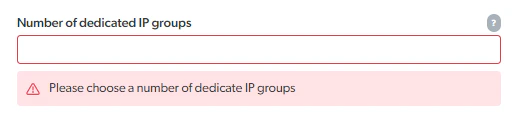
### IP Groups `gIPs`
Only works with the **Dedicated** option
`gIP` contains between 6-90 IPs at any given moment while sharing the same attributes, targeting the selected dedicated domains within the zone "Configuration" section. `gIPs` are used by Bright Data to create a single identifier for this group of proxies (with distinct IP addresses). Those proxies will be used explicitly by you towards the domains you target.
 ***
### Domains
Only works with the **Dedicated** option
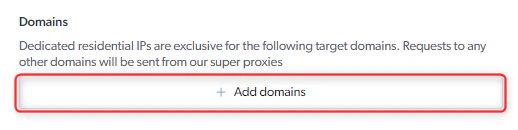
Define the domains you'd like your proxies to be exclusive to. Every request to a domain in this list is served thru your dedicated proxies exclusively. No one else is allowed to target those domains via your dedicated proxies. You can use this zone for requests to other target domains, yet those requests will be served thru our datacenter hosted Bright Data proxies.
For example: if in the list you have two domains: a.com and b.com, every request to a.com and b.com are routed thru your dedicated proxies, request to c.com is routed thru our datacenter hosted proxy. Requests to a.com and b.com from others will **never** go thru your dedicated proxies.
***
### Domains
Only works with the **Dedicated** option
Define the domains you'd like your proxies to be exclusive to. Every request to a domain in this list is served thru your dedicated proxies exclusively. No one else is allowed to target those domains via your dedicated proxies. You can use this zone for requests to other target domains, yet those requests will be served thru our datacenter hosted Bright Data proxies.
For example: if in the list you have two domains: a.com and b.com, every request to a.com and b.com are routed thru your dedicated proxies, request to c.com is routed thru our datacenter hosted proxy. Requests to a.com and b.com from others will **never** go thru your dedicated proxies.
 ***
## Advanced Options
### Automatic Failover
In case we cannot reach the proxy peer for your request, we will route the request to another available peer. Automatic failover does not apply when you choose default countries: if we cannot find a peer in the country you selected, we will fail the request with error.
Enabling automatic failover assures execution of the request, regardless of the availability of a specific peer.
***
### Special Ports & Protocols
Ports `80` and `443` are available by default, supporting HTTP and HTTPS & SOCKS5 protocols. We also support all ports over `1024` in our Datacenter proxy network. [Read more on ports and protocols...](https://docs.brightdata.com/proxy-networks/faqs#how-to-see-supported-ports-and-protocols)
Bright Data can support additional ports by request. A dedicated and additional compliance process with the Bright Data compliance team will follow every request to support a new port.
If you would like additional port permissions, you can contact Bright Data Support.
Examples of ports that require Bright Data compliance review before activation:
| Port | Protocol |
| ---- | -------- |
| `70` | HTTP |
| `98` | HTTPS |
### Zone usage limit
Set usage limit to your zone: you can limit spending or traffic. This provides additional layer of control to your budget and bandwidth consumption, mostly over our rotating shared pool proxies.
### Long-session peers: Deprecated
Bright Data used to offer long session peers. This is no longer offered, account which had zone configured with long session peers will still be able to use them.
To see how to direct requests to explicit proxies, or create a sequence of requests with the same context (session) routed thru the same proxy peer see here: [https://docs.brightdata.com/api-reference/proxy/rotate\_ips#proxy-and-ip-rotation-control](https://docs.brightdata.com/api-reference/proxy/rotate_ips#proxy-and-ip-rotation-control)
***
## Advanced Options
### Automatic Failover
In case we cannot reach the proxy peer for your request, we will route the request to another available peer. Automatic failover does not apply when you choose default countries: if we cannot find a peer in the country you selected, we will fail the request with error.
Enabling automatic failover assures execution of the request, regardless of the availability of a specific peer.
***
### Special Ports & Protocols
Ports `80` and `443` are available by default, supporting HTTP and HTTPS & SOCKS5 protocols. We also support all ports over `1024` in our Datacenter proxy network. [Read more on ports and protocols...](https://docs.brightdata.com/proxy-networks/faqs#how-to-see-supported-ports-and-protocols)
Bright Data can support additional ports by request. A dedicated and additional compliance process with the Bright Data compliance team will follow every request to support a new port.
If you would like additional port permissions, you can contact Bright Data Support.
Examples of ports that require Bright Data compliance review before activation:
| Port | Protocol |
| ---- | -------- |
| `70` | HTTP |
| `98` | HTTPS |
### Zone usage limit
Set usage limit to your zone: you can limit spending or traffic. This provides additional layer of control to your budget and bandwidth consumption, mostly over our rotating shared pool proxies.
### Long-session peers: Deprecated
Bright Data used to offer long session peers. This is no longer offered, account which had zone configured with long session peers will still be able to use them.
To see how to direct requests to explicit proxies, or create a sequence of requests with the same context (session) routed thru the same proxy peer see here: [https://docs.brightdata.com/api-reference/proxy/rotate\_ips#proxy-and-ip-rotation-control](https://docs.brightdata.com/api-reference/proxy/rotate_ips#proxy-and-ip-rotation-control)